
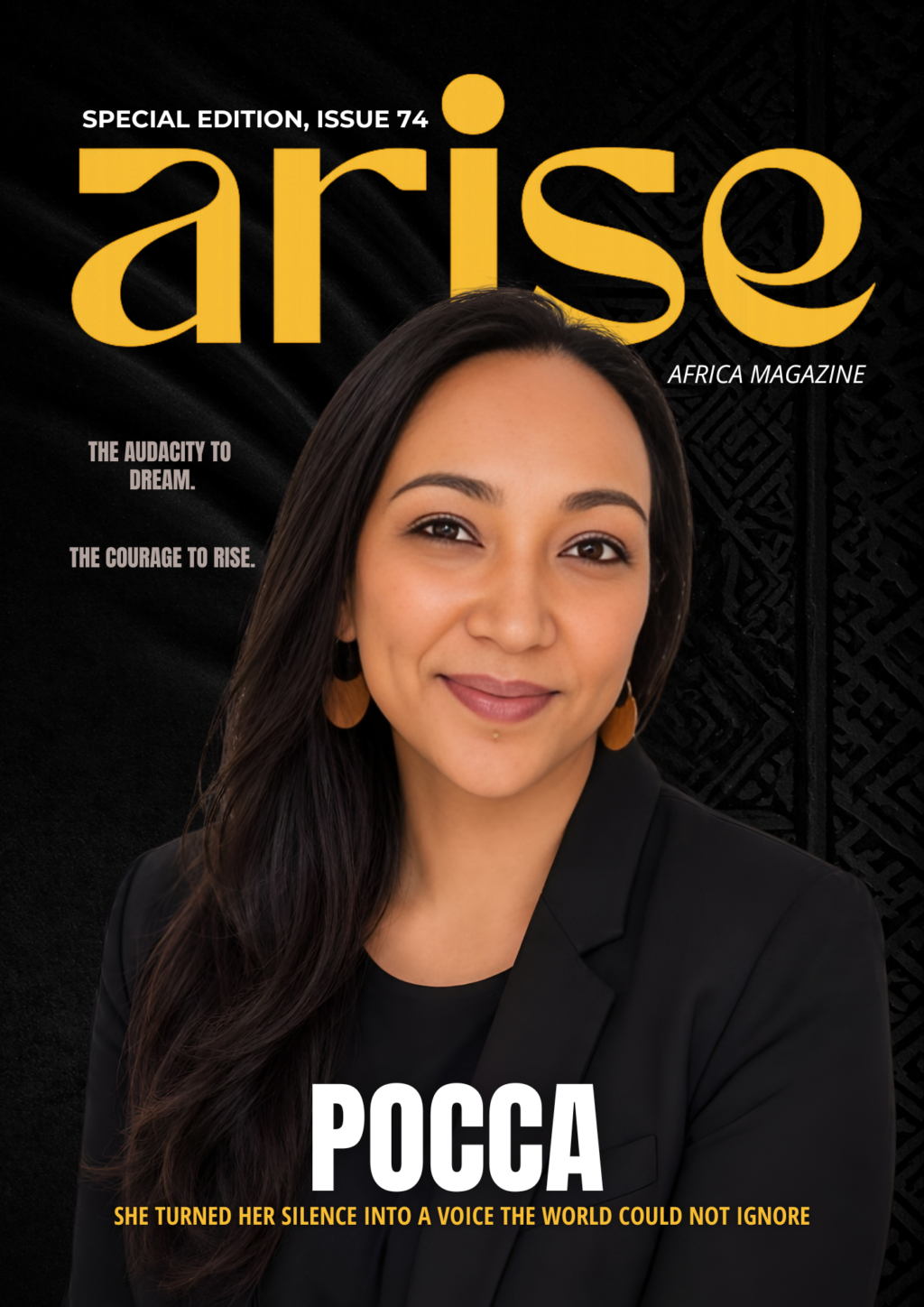
Some stories deserve to be heard because they celebrate success. Others deserve to be told because they remind us what it truly means to survive. The story of Fatema Adam, better known by her pen name Pocca, belongs to the second category. It is a story shaped by quiet resilience, personal battles and the remarkable ability to transform pain into purpose. Today, readers know Pocca as a Mauritian writer, poet and international SEO specialist whose work spans English, French and Mauritian Creole.
Her writing explores identity, compassion, bullying, trauma, self worth and healing with a sincerity that has earned her readers far beyond the shores of Mauritius. Yet long before her poems reached the public, her words existed in silence. They were written not for recognition but for survival. Every page became a refuge, every sentence an attempt to understand experiences that had left invisible scars. What began as a private conversation with herself would eventually become a lifeline for others.
GROWING UP WITH QUESTIONS NO CHILD SHOULD ASK
Children are born believing they belong. It is often the world around them that teaches otherwise. For Pocca, childhood was marked by comments that slowly eroded confidence and replaced innocence with self doubt. Remarks about skin colour, appearance and fitting into society’s expectations became familiar. Individually, they may have seemed insignificant. Together, they shaped the way she viewed herself and the space she believed she was allowed to occupy. Like countless young people across Africa and around the world, she began to wonder whether acceptance depended on becoming someone different. The struggle was never only about words spoken by others. It was about the voice those words eventually created within her. That inner dialogue questioned her worth far more persistently than any classroom bully ever could. Years later, she would recognise that this silent battle is one of the greatest challenges faced by those who have experienced rejection during childhood.
WHEN WORDS BECAME A PLACE OF REFUGE
Some people write because they enjoy storytelling. Others write because they have something important to say. Pocca wrote because it was the only place where she could exist without fear of judgement. A blank page asked nothing of her. It did not compare her with anyone else or demand that she become someone she was not. It simply listened. In those quiet moments, writing became more than an outlet for emotion. It became a safe place where honesty replaced fear and reflection slowly replaced insecurity. Those early notebooks were never intended for publication. They carried no ambition for literary recognition or public applause. Instead, they became companions through seasons when understanding seemed difficult to find elsewhere. Looking back today, it is clear that the poems written in private were laying the foundation for a voice that would one day encourage thousands of readers facing struggles of their own.
ELEVEN YEARS HIDDEN FROM THE SPOTLIGHT
There are seasons in every life when growth takes place away from public view. They are often misunderstood because little appears to be happening on the surface. In reality, those hidden years shape everything that follows. For more than a decade, Pocca lived quietly, keeping much of herself hidden from the world. She fulfilled her responsibilities, worked diligently and appeared to live an ordinary life. Behind that appearance, however, she carried a conviction that remaining unnoticed was the safest way to avoid further rejection. Writing never stopped. Poem after poem filled the pages of notebooks that no one else was expected to read. Each piece captured moments of reflection, questions about identity and the determination to understand life’s deeper meaning. Those years were not wasted. They became a season of preparation, allowing her voice to mature long before it reached an audience.
THE DECISION THAT CHANGED EVERYTHING
Life is rarely transformed by dramatic events alone. More often, change begins with a single conviction that becomes impossible to ignore. As stories of bullying, mental health struggles and young people losing hope became increasingly common, Pocca found herself confronting a difficult question. If her own experiences had taught her valuable lessons, what purpose was served by keeping those lessons hidden? The answer required courage. Publishing her work meant allowing strangers to read emotions she had protected for years. It meant accepting the possibility of criticism in exchange for the opportunity to help someone she might never meet. What happened next surprised her. Readers responded not with judgement but with honesty. They shared stories of bullying, anxiety, loneliness and the silent battles they had carried for years. Her poetry became more than literature. It became conversation. It became connection. Most importantly, it became proof that vulnerability often creates the deepest form of human understanding.
FINDING HER LITERARY HOME
Beyond writing alone, Pocca found a creative family in Fusion – Collectif de Poètes, a Mauritian collective that encouraged her to trust her voice and embrace her place in the literary community. Her inclusion in the anthology Osmose marked an important milestone, affirming that stories born in solitude can flourish through community. More than a literary collective, Fusion became a reminder that every writer needs people who believe in their voice before the rest of the world does.
FINDING STRENGTH THROUGH AUTHENTICITY
In a society that often rewards appearances, authenticity remains one of the rarest qualities a person can possess. Pocca’s work does not attempt to impress readers with elaborate language or complicated ideas. Instead, it invites them to recognise themselves within ordinary moments of pain, hope, forgiveness and resilience. Her poems speak about emotions many people struggle to describe, offering reassurance that difficult experiences need not define an entire life. Writing in three languages has expanded her reach, but the message remains constant regardless of the words she chooses. Compassion is never weakness. Difference is never failure. Every human life carries value, even when the individual struggles to recognise it. Perhaps this explains why her writing continues to resonate across cultures. The details of our stories may differ, but the longing to be understood is universal.
MORE THAN A WRITER
Behind every successful creative is a purpose greater than recognition. For Pocca, success is measured not by awards, publications or growing audiences, but by the messages she receives from readers who finally feel seen. A single note from someone who chooses hope over despair carries greater significance than public applause. Her work reminds us that literature still possesses the power to change lives, not through grand declarations but through quiet moments of connection between writer and reader. That philosophy has shaped every stage of her journey and continues to define the legacy she hopes to leave behind.