
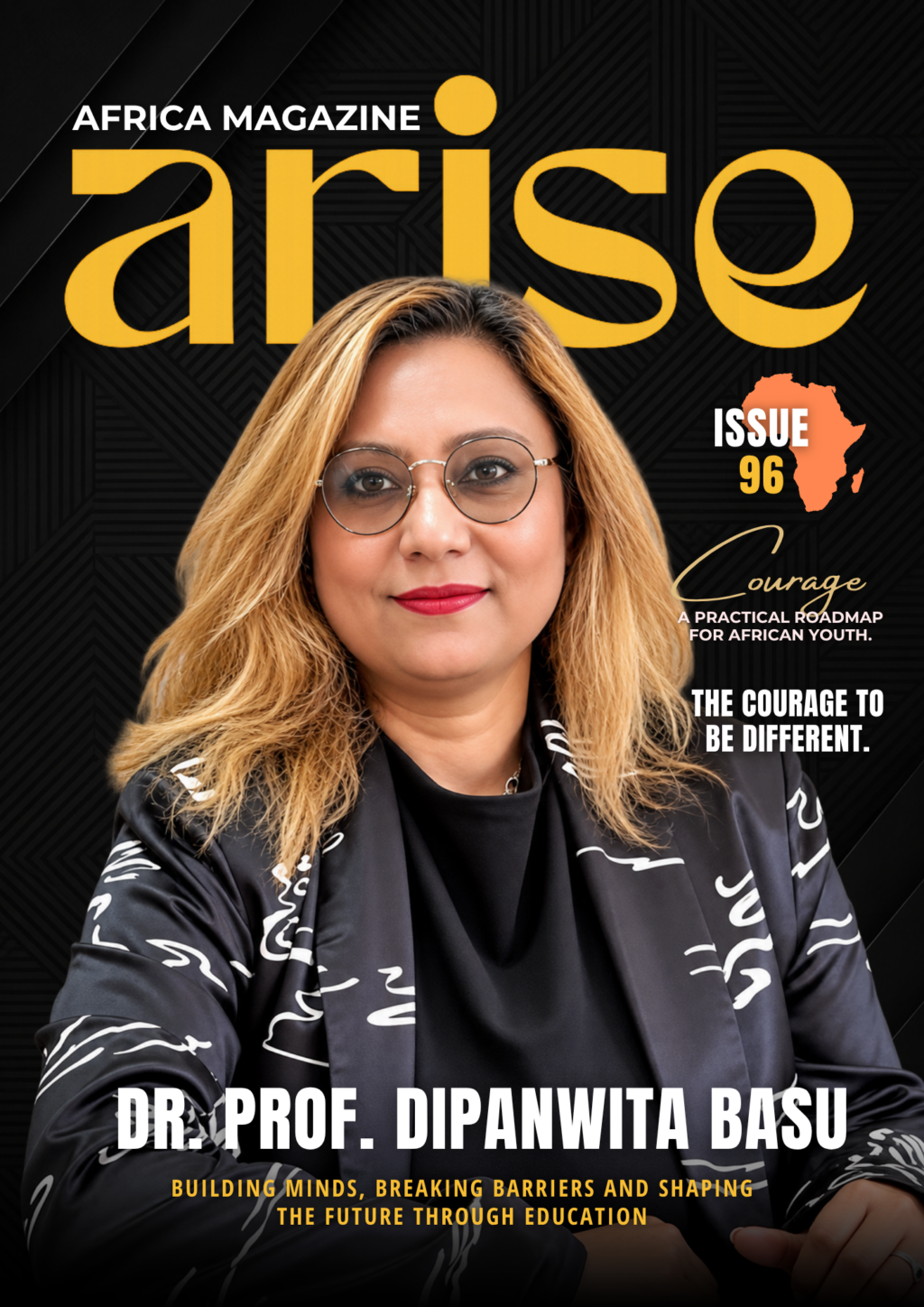
From India to Zambia, Dr. Dipanwita Basu’s journey reflects the power of educational leadership, institutional vision and the determination to create opportunities that extend beyond the classroom.
Education has the power to change individual lives, transform communities and shape the future of nations. Yet, behind every meaningful educational transformation are individuals who choose to go beyond teaching lessons and commit themselves to building opportunities for generations to come. Dr. Prof. Dipanwita Basu is one such individual. An educator, academic leader, author and institution builder, she has spent more than two decades in education, developing a professional journey that connects India and Zambia through a shared commitment to learning, academic excellence and human development. Born on 26 October 1979, Basu’s academic journey began in India, where she attended St. Xavier’s High School and St. Xavier’s College. She later pursued a Bachelor of Science degree at Calcutta University, Kolkata, before advancing her academic and professional development through further studies and international academic engagements. Her career, however, would eventually extend beyond the traditional boundaries of the classroom.
FROM TEACHING TO INSTITUTION BUILDING
In 2020, Basu took a significant step in her professional journey by establishing Atlantic Cambridge School in Zambia. The institution represented more than an expansion of her career; it was an opportunity to translate her educational philosophy into an institutional vision. With a focus on Cambridge IGCSE and A-Level education, Atlantic Cambridge School was established to provide learners with access to internationally oriented academic programmes while promoting an environment that encourages intellectual development and academic excellence. Building an educational institution in a different country comes with its own demands, from developing institutional systems to nurturing educators, engaging families and maintaining academic standards. For Basu, this undertaking has required the combination of educational expertise, leadership and entrepreneurial determination. Importantly, her institutional vision also reflects a commitment to local empowerment. The school employs Zambian professionals across its workforce, including teachers, secretarial personnel and other members of staff, creating opportunities for local talent to contribute to the country’s education sector. Her journey also illustrates the growing importance of cross-cultural exchange in education, demonstrating how professional experience and ideas developed in one country can contribute to educational development in another.
MAKING COMPLEX KNOWLEDGE ACCESSIBLE
Beyond managing an educational institution, Basu has made contributions to academic publishing through the authorship of A-Level and IGCSE textbooks in Mathematics, Biology and Chemistry. Her work in educational publishing addresses an important challenge in science education: helping learners understand complex subjects through accessible explanations and structured learning materials. For students navigating demanding academic curricula, the ability to understand concepts rather than simply memorise information can make a significant difference in their educational experience. She has also championed student-centred teaching approaches, curriculum innovation and teacher development, recognising that quality education depends not only on the learner but also on the capacity, preparation and commitment of educators. Her professional interests extend to institutional development, research, academic leadership and personalised learning.
RECOGNITION ACROSS BORDERS
Basu’s professional journey has attracted recognition through a range of national and international awards and academic distinctions. Among the honours highlighted in her professional profile are the Zambia Business Award for National Lifetime Achievement in 2025, the She Millionaire Award for Women Leadership in Education in South Africa, and the Golden Glow Award as an Educationist in Kenya. Her 2026 recognitions include the Zambia Business Award for Educationist of the Year, another Golden Glow Award and the Community Builders in Africa Award as an Educationist, presented in Zimbabwe. Her profile also lists academic fellowship and professorship distinctions associated with Estonia University, alongside European academic honours from DHL University. These recognitions reflect the breadth of professional platforms through which her work has received acknowledgement, particularly in education, leadership and humanitarian engagement.
A LEADERSHIP PHILOSOPHY ROOTED IN PURPOSE
As Founder and Director of Atlantic Cambridge School, Basu’s leadership responsibilities extend to mentoring teachers, supporting students and promoting innovation in STEM education and digital learning. Her professional journey also carries a wider message about women in leadership. Establishing institutions, influencing educational practices and contributing to knowledge production require the confidence to pursue ambitious ideas and the resilience to sustain them. Her commitment to human development also extends beyond the school environment. She is currently involved in caring for an orphanage of 35 children, reflecting a humanitarian dimension to her work and a concern for the welfare and future of vulnerable young people. This commitment reinforces the belief that education and opportunity should reach beyond those who already have access to them. Looking towards a broader impact, Basu is also in the process of establishing the AEDTC Foundation – Atlantic Education Training Centre Foundation. The initiative is envisioned as another platform for empowering Zambians through practical education, professional training and employment opportunities. Through the foundation, she intends to introduce certificate and diploma programmes in areas including engineering and secretarial studies, equipping participants with relevant skills and creating pathways towards employment. The vision is not simply to provide qualifications, but to connect learning with practical opportunities that can improve livelihoods For aspiring educators and entrepreneurs, her experience demonstrates that professional influence can extend beyond personal advancement when knowledge is translated into practical opportunities for others.
THE LEGACY BEYOND THE TITLES
In an era when educational systems are being challenged to respond to changing technologies, global competition and the evolving needs of young people, institution builders and committed educators have an important role to play. Dr. Prof. Dipanwita Basu’s journey from India to Zambia offers an example of how educational ambition can cross geographical boundaries and become an avenue for institutional contribution. Ultimately, her story invites a deeper reflection on what it means to be an educator. It is not simply about delivering lessons, earning academic distinctions or occupying positions of leadership. It is about creating environments where potential can be discovered, knowledge can flourish and future generations can find the confidence to pursue their ambitions.
Through institutional leadership, local capacity development, humanitarian engagement and plans for expanded vocational training, Basu’s work reflects an understanding that meaningful educational impact must reach beyond the classroom. Because the true legacy of education is not found in the titles attached to an educator’s name, but in the minds empowered, the opportunities created and the generations prepared to shape tomorrow.